

Think about preparing for natural disasters. You need to get ready for both earthquakes that happen suddenly and erosion that happens slowly over time. Both types need planning and protection. Money problems work the same way – the biggest challenges for families and businesses aren’t always sudden shocks, but can happen slowly over many years. With inflation, we face both the risk of sudden price jumps and the slow loss of what our money can buy.
If you remember the high inflation of the 1970s and early 1980s, or the price increases after COVID-19, this situation might feel familiar. Inflation is staying higher than many people want, and there are worries that tariffs (fees on imported goods) will make things cost more. At the same time, people have jobs, are spending money, and companies are making profits. This makes things complicated for both investors and government officials who are trying to balance economic growth with controlling inflation.
Instead of waiting for inflation to become a bigger problem, smart long-term investors should build portfolios (collections of investments) that can handle different situations while staying focused on their money goals. What do recent inflation reports tell us about the economy and investing?
Rising prices slowly reduce what your money can buy
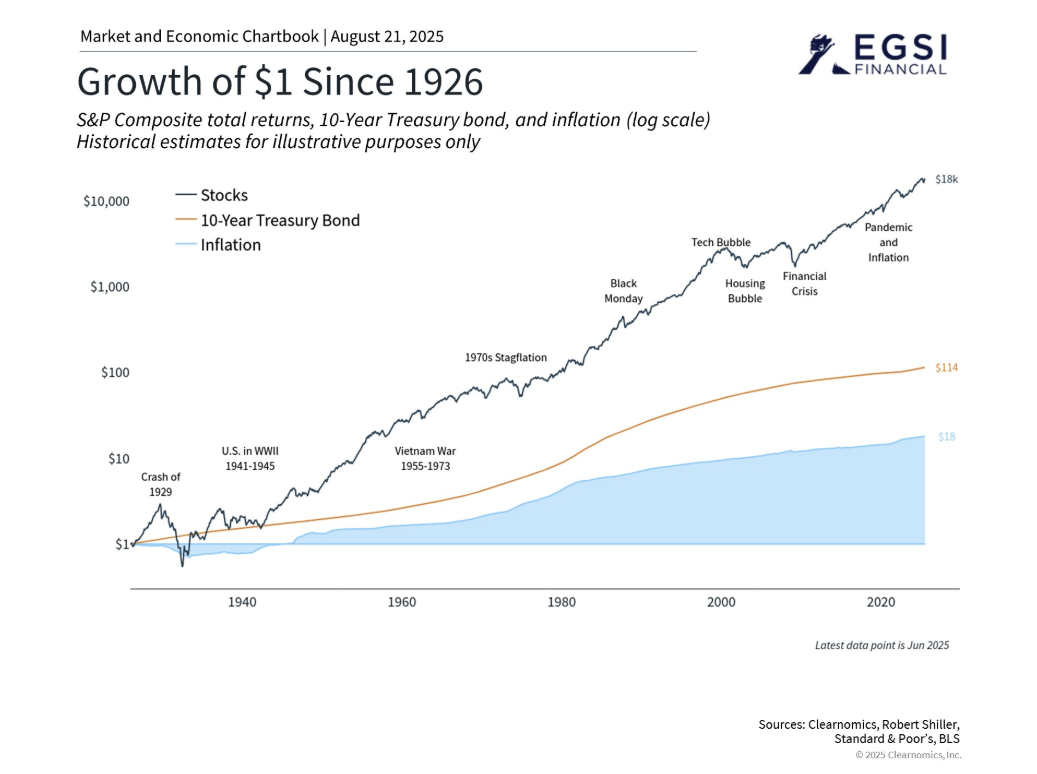
Most investors, savers, and retired people know that beating inflation is one of the main reasons to invest. Keeping the buying power of your money, whether it’s in stocks, bonds, bank accounts, or other investments, is important to make sure you can afford a comfortable life in the future. The chart above shows this clearly. What cost $1 one hundred years ago now costs $18. You can also see that price increases got faster in the 1970s, and again recently.
Looking at this, you might think that zero inflation – or even deflation where prices go down over time – would be good. But inflation isn’t just about what we pay for things. It’s also about the health of the whole economy. Economic experts believe that low but positive inflation, usually around 2%, creates the best balance for people and the economy.
A moderate inflation rate gives central banks (like the Federal Reserve) room to use monetary policy (tools to control the economy). It encourages spending and investment when needed. Also, some inflation helps prevent the economy from falling into deflationary spirals. This is when falling prices make people wait to buy things because they expect even lower prices later.
So it’s important to understand the difference between personal and economy-wide effects. While 2-3% inflation might help create a healthy growing economy, even this moderate level can hurt savers. These rates might seem okay compared to the very high inflation of the 1970s or recent post-pandemic increases, but they still add up over time.
For example, with just 3% annual inflation, the cost of things doubles about every 24 years. This means that $100,000 worth of buying power today would need $200,000 in two decades – about how long an average retirement lasts. This erosion is especially hard for retired people and savers holding cash. For all investors, inflation creates a “hurdle rate” – their investment returns need to be higher than inflation to actually grow their wealth.
Inflation keeps staying higher than expected
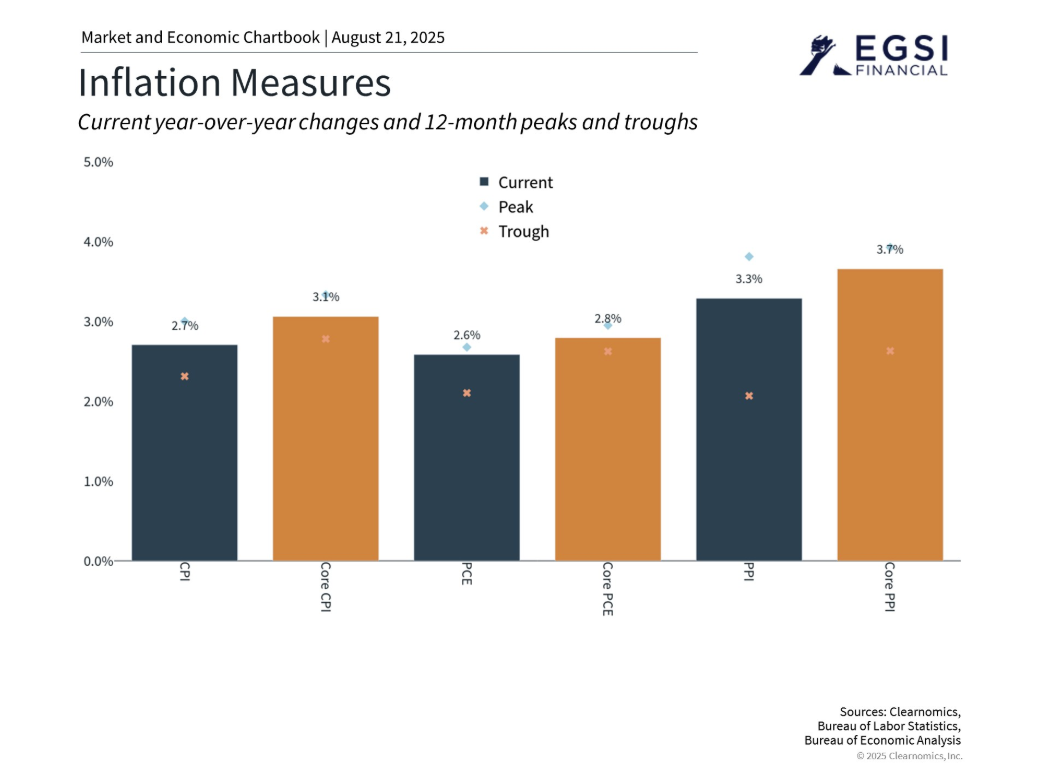
In today’s inflation environment, many people worry about the sudden impact that tariffs might have on inflation. The latest Producer Price Index report (which measures what businesses pay for goods) shows that prices jumped in July. Wholesale prices (what businesses pay) surged 0.9%, the biggest monthly increase since June 2022, and much higher than economists expected. Goods prices rose 0.7% during this period, while services jumped 1.1% in just one month.1
These numbers matter because increases in wholesale prices often show up in consumer prices (what regular people pay) several months later, as inflation moves through the supply chain (from producers to stores to customers). This suggests that companies have been absorbing some tariff costs so far but might start passing higher prices on to customers.
The latest Consumer Price Index report (which measures what consumers pay) shows a less dramatic increase, but still confirms that inflation is stickier (staying higher) than many would like. These recent numbers show that prices rose 2.7% over the past year for headline inflation, or 3.1% when excluding food and energy prices which have been flat or negative. Much of this was due to increases in shelter costs (housing expenses).2
While these numbers help us understand the economy in general terms, they also directly affect everyday family budgets. The price increases are showing up where people notice them most: restaurant meals rose 3.9% over the past year, medical care 3.5%, and car insurance jumped 5.3%. Even household items like furniture have risen 3.4%, adding pressure to family budgets that have already been stretched by years of higher prices.
Beating inflation requires smart investment choices
While these increases are significant, inflation is still well below the double-digit rates we saw from 2021 to 2022. However, even if tariffs don’t cause sudden inflation jumps, they may raise the average level of prices over time, reducing the value of cash. This is especially true if wage increases don’t keep up with price increases, and if investors don’t have long-term investment mixes that can beat inflation rates.
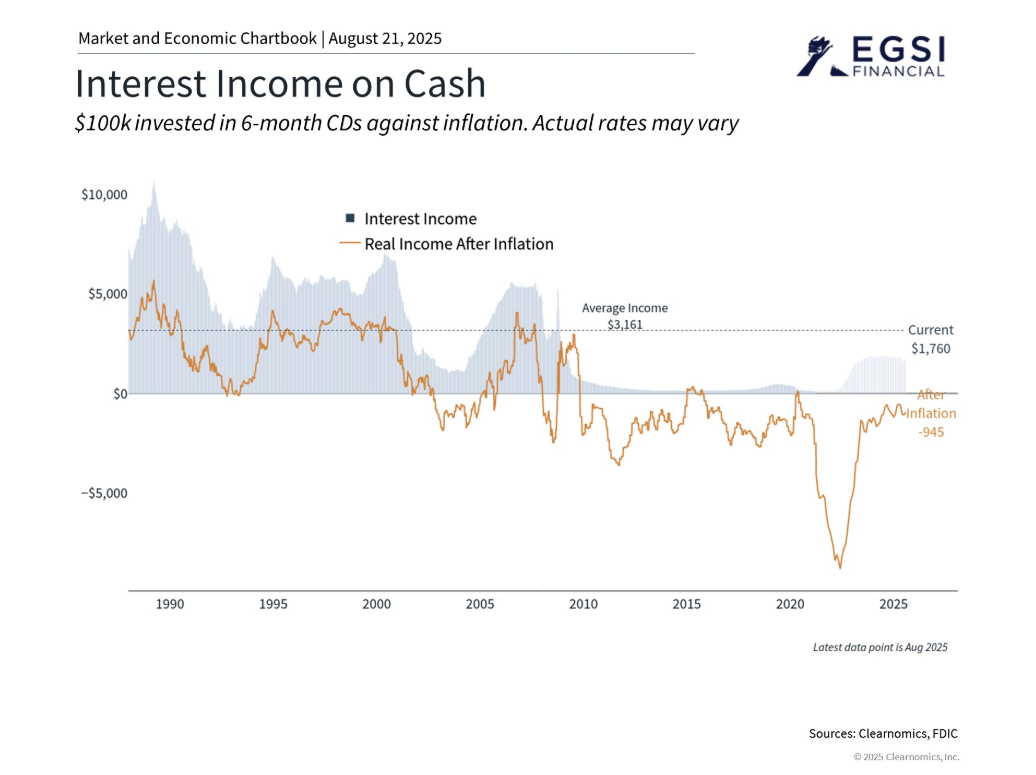
So it’s important to understand what inflation means for investment portfolios. The chart above shows that the average interest earned on cash hasn’t kept up with inflation. Also, the amount held in money market funds (safe, short-term investments) is still at all-time highs of $7.1 trillion, even as short-term interest rates have gone down.3
While past performance doesn’t guarantee future results, history shows that both stocks and bonds have beaten inflation over long periods, as shown in the first chart above. However, stocks can be volatile (go up and down a lot) during inflationary periods, as we saw in 2022. This is why having a balance of different types of investments that can handle both inflation and periods of ups and downs can help investors stay on track.
Most importantly, investors should resist making big portfolio changes based on monthly inflation reports or worries about tariffs. While it’s important to make sure portfolios are ready for different situations, overreacting to short-term data often leads to poor timing decisions that can hurt long-term financial goals.
The bottom line? Inflation’s slow erosion of purchasing power is a major investment challenge. Having an appropriate mix of investments that can generate income and growth is the best way to reach your financial goals.
1. https://www.bls.gov/news.release/ppi.nr0.htm
2. https://www.bls.gov/news.release/cpi.t01.htm
3. https://www.ici.org/research/stats/mmf
We are an independent financial services firm helping individuals create retirement strategies using a variety of investment and insurance products to custom suit their needs and objectives.
Advisory services offered through EGSI Investment Management, Inc., a Registered Investment Advisor with the State of Ohio. Insurance services offered through EGSI Financial, Inc.
Investing involves risk, including the potential loss of principal. No investment strategy can guarantee a profit or protect against loss in periods of declining values. None of the information contained on this website shall constitute an offer to sell or solicit any offer to buy a security or any insurance product.
Any references to protection benefits, safety, security, or steady and lifetime income streams on this website refer only to fixed insurance products. They do not refer, in any way, to securities or investment advisory products. Annuity guarantees are backed by the financial strength and claimspaying ability of the issuing insurance company. Annuities are insurance products that may be subject to fees, surrender charges and holding periods which vary by insurance company. Annuities are not FDIC insured.
The information and opinions contained in any of the material requested from this website are provided by third parties and have been obtained from sources believed to be reliable, but accuracy and completeness cannot be guaranteed. They are given for informational purposes only and are not a solicitation to buy or sell any of the products mentioned. The information is not intended to be used as the sole basis for financial decisions, nor should it be construed as advice designed to meet the particular needs of an individual’s situation.
Investing involves risk, including the potential loss of principal. No investment strategy can guarantee a profit or protect against loss in periods of declining values. None of the information contained on this website shall constitute an offer to sell or solicit any offer to buy a security or any insurance product.
Any references to protection benefits or steady and reliable income streams on this website refer only to fixed insurance products. They do not refer, in any way, to securities or investment advisory products. Annuity guarantees are backed by the financial strength and claims-paying ability of the issuing insurance company. Annuities are insurance products that may be subject to fees, surrender charges and holding periods which vary by insurance company. Annuities are not FDIC insured.
The information and opinions contained in any of the material requested from this website are provided by third parties and have been obtained from sources believed to be reliable, but accuracy and completeness cannot be guaranteed. They are given for informational purposes only and are not a solicitation to buy or sell any of the products mentioned.