
The stock market has delivered impressive gains over the past quarter, so the recent period of turbulence may be puzzling for many investors. The Nasdaq, a major index that tracks many technology companies, saw its biggest single-day drop in a year, falling 4.2% on Friday, June 5.
Interestingly, this drop came right after a strong jobs report, which is generally considered good news for the economy. However, a healthy job market can make it more likely that the Federal Reserve (the Fed, which is the central bank of the United States) will raise interest rates before the end of the year.1 At the same time, a brief flare-up of tensions in the Middle East added to concerns that investors had already been watching. Market swings like this are normal, but the recent volatility has some identifiable causes that history can help us put into context.
Just as a well-built structure is designed to handle all kinds of weather, not just sunshine, investors should keep in mind that strong market returns are not a signal to stop thinking about managing risk and keeping a balanced portfolio. It is important to appreciate good market performance, but strong periods are also a good time to make sure a portfolio is prepared for whatever may come next.
Even with the recent one-day decline, major market indexes are still showing solid gains for the year. History also suggests there is no need to panic about the possibility of Fed rate hikes. There can be short-term volatility as markets adjust to the idea of higher interest rates, but stocks have generally performed well during many past periods when the Fed was raising rates. Understanding why markets react to interest rates, and keeping these moves in perspective, can help investors stay on track toward their long-term goals.
The market has experienced renewed volatility
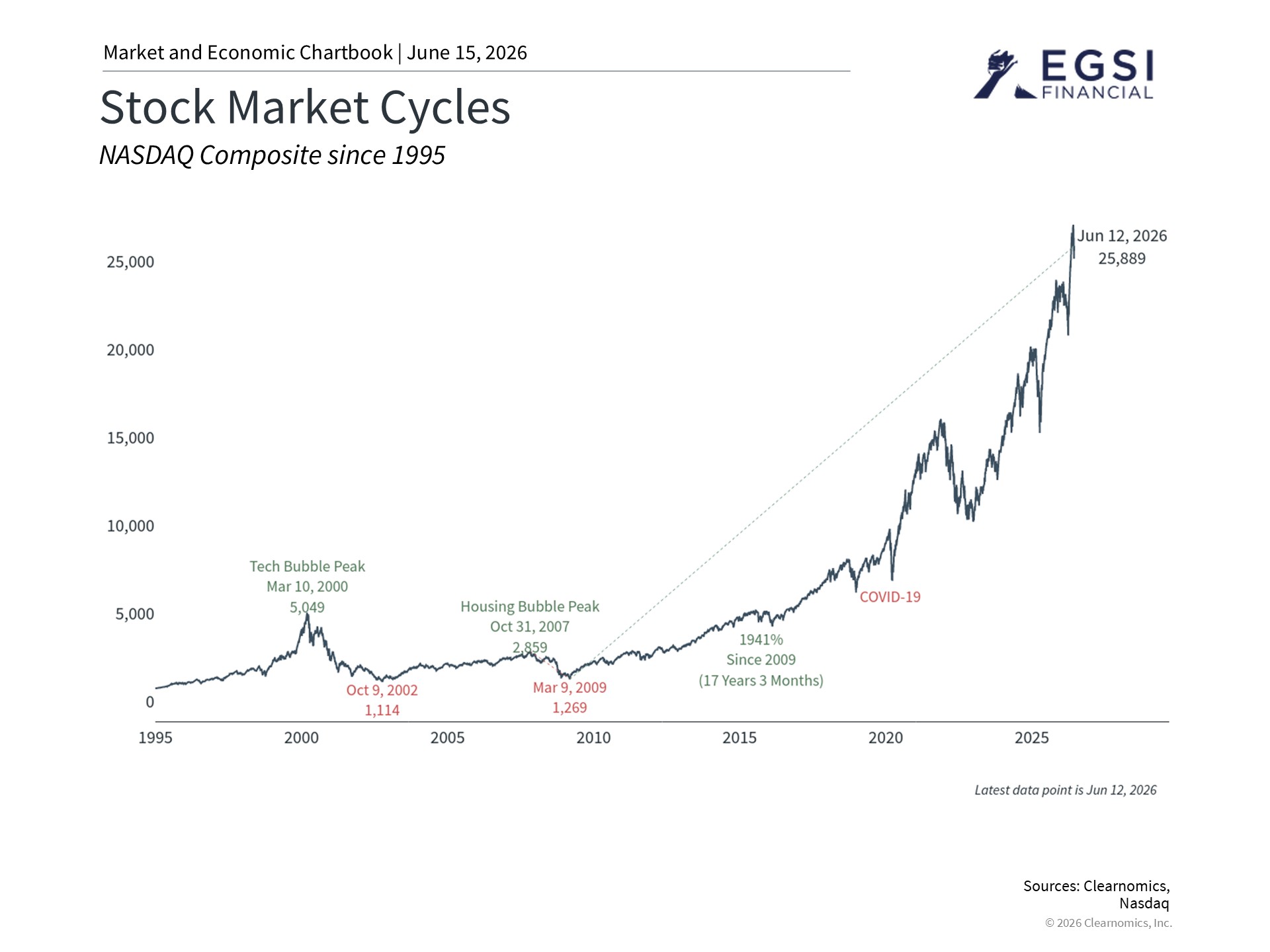
Major indexes, including the S&P 500, Dow Jones Industrial Average, and the Nasdaq, have picked up momentum in recent months. Some of this strength can be thought of as a “relief rally,” meaning that investors feel better than expected about how things turned out. Specifically, the conflict in the Middle East has had less of an economic impact than many originally feared, even though oil prices have risen. Corporate earnings, which refer to company profits, have also been strong, and there is growing excitement about a wave of upcoming initial public offerings (when private companies offer shares to the public for the first time).
One notable contrast is that the bond market has had a harder time, as interest rates have stayed high. Rates have risen across the board this year, with the 10-year Treasury yield, for example, sitting at around 4.5%.2 Bonds are loans that investors make to governments or companies. The bond market is sometimes called the “smart money” because bond investors tend to pay close attention to trends in inflation, economic growth, and Fed policy.
Whether or not that reputation is deserved, the bond market has been signaling that interest rates may stay higher for longer than some had hoped, even as stocks have rallied. It is not too surprising, then, that the stock market recently started reacting to the same developments. This is especially true for technology and AI-related stocks, which tend to be particularly sensitive to changes in interest rates.
Technology stocks can be sensitive to interest rates
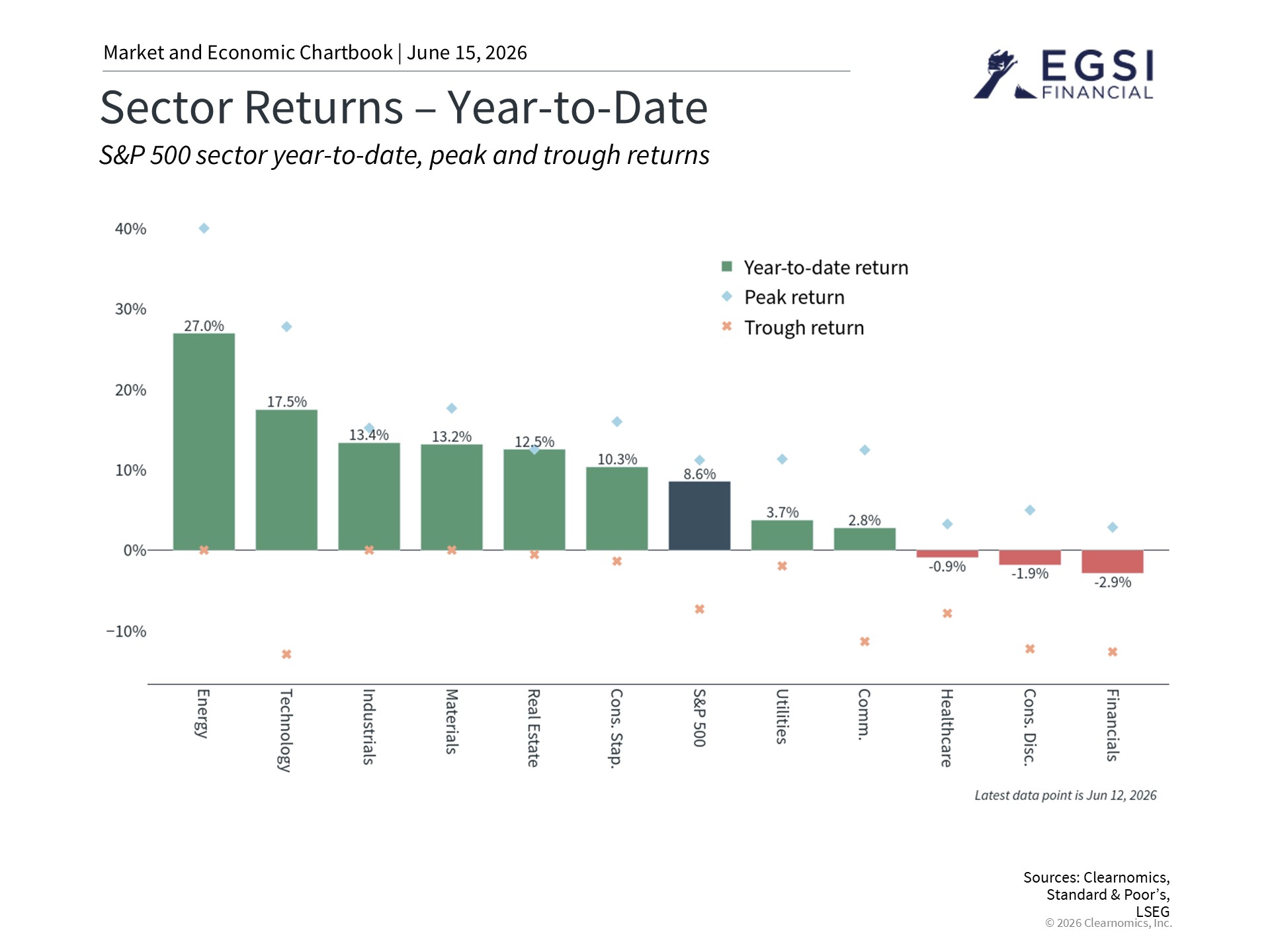
A clear example of this sensitivity is the Magnificent 7, a group of large technology companies. From their peak at the end of 2021 to their low point in late 2022, a period when inflation was rising quickly and interest rates jumped sharply, this group lost about half of its value.3 This had a significant effect on the Nasdaq as well as broad market categories such as Information Technology and Communication Services. However, these groups began to recover as rates stabilized and the Fed slowed down its rate increases, eventually climbing back to new highs.
So why are technology stocks so sensitive to interest rates? Investors buy these stocks largely because they expect the companies to grow significantly over many years into the future, unlike more established businesses that generate steady, predictable profits today. Because interest rates affect how much those future profits are worth in today’s terms, even small changes in rates, especially when they reverse direction, can cause large price swings. Think of interest rates like a long lever: a small movement at one end can create a big effect at the other.
This relationship matters more than ever because technology-related stocks now make up a larger share of the overall stock market. The Magnificent 7, for instance, now accounts for about one-third of the S&P 500.4 This means many investors may hold a bigger portion of these companies in their portfolios than they realize. The chart above shows that even after the latest pullback, these sectors have still done well this year. Even so, investors may experience more frequent bouts of volatility than in the past, which is why keeping an eye on how a portfolio is divided across different asset types (called asset allocation) matters just as much when markets are rising as when they are falling.
Markets have performed well across Fed rate hike cycles
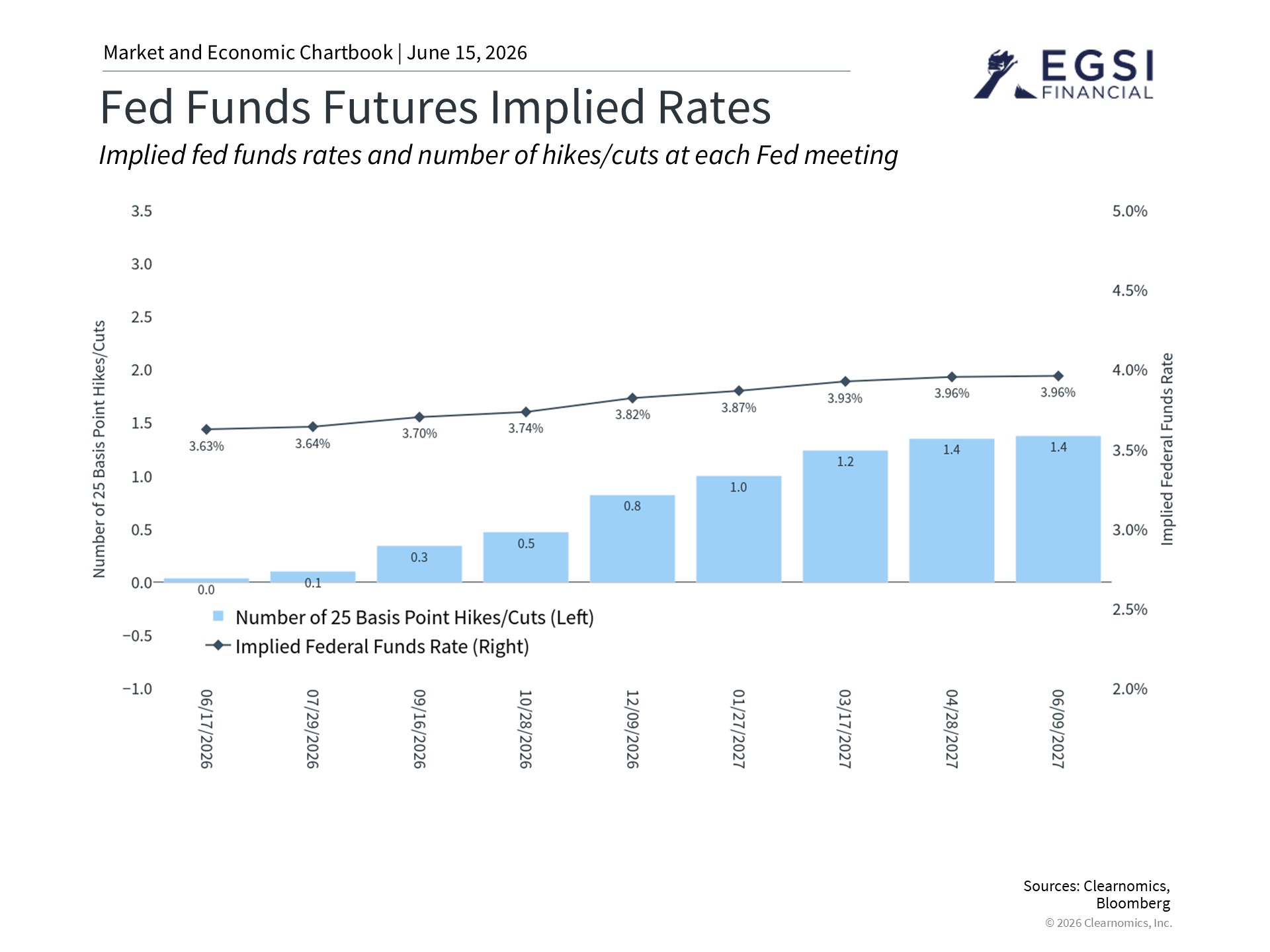
It is worth keeping in mind that expectations for what the Fed will do can shift quickly depending on economic conditions. Earlier this year, the general view was that the Fed would keep cutting rates. Those expectations changed rapidly as energy prices rose and the job market strengthened in recent months, as shown in the chart above. This is a reminder that the Fed is often responding to economic events rather than setting the agenda.
There is also some uncertainty around how Kevin Warsh, as the new Fed chair, will respond to inflation. In the past, he has been seen as an inflation hawk, meaning he would tend to favor raising interest rates to help keep prices stable for consumers and businesses. This stance could put him at odds with the White House’s preference for rate cuts. He has also publicly stated that the Fed should reduce its balance sheet, which is the total amount of assets it holds. Reducing the balance sheet effectively tightens financial conditions, making borrowing more expensive.
However, all of this remains speculation until the Fed actually makes decisions based on real economic data. It is also not yet clear whether this would mark the start of a longer rate hike cycle or simply a brief period of tighter conditions.
That said, even if current market expectations turn out to be correct, the Fed is not expected to raise rates until the end of the year, and only by 25 basis points (a basis point is one one-hundredth of a percent, so 25 basis points equals 0.25%), as seen in the chart above. This is a modest move by historical standards, especially compared to the rate hike cycle from 2022 to 2023, when the Fed raised rates from near zero all the way to 5.25% over 11 separate increases.
More importantly, the market has performed well across many different interest rate environments, including periods when rates are rising. This is especially true when the Fed is raising rates because the economy is doing well, since a healthy economy tends to support company profits. In other words, it is not unusual for the stock market to rise even while the Fed is raising rates.
The bottom line? Recent volatility reflects the possibility of Fed rate hikes and renewed geopolitical tensions, but neither is a reason to fundamentally change long-term plans. While parts of the stock market may experience short-term volatility, history shows that markets can perform well across many different rate cycles.
References
1. https://www.cmegroup.com/markets/interest-rates/cme-fedwatch-tool.html
2. https://home.treasury.gov/policy-issues/financing-the-government/interest-rate-statistics
3. The Magnificent 7 includes Apple, Microsoft, Nvidia, Amazon, Alphabet, Meta, and Tesla. The peak from 2021 to 2022 occurred on November 19, 2021, and the trough occurred on December 27, 2022.
4. Clearnomics research based on Standard & Poor’s data
5. https://www.wsj.com/opinion/the-high-cost-of-the-feds-mission-creep-role-responsibility-monetary-policy-economy-20a352f8
6. https://www.federalreserve.gov/monetarypolicy/fomccalendars.htm#32979
Index Descriptions
S&P 500
The Standard & Poor’s 500 Index is a capitalization-weighted index of 500 stocks designed to measure performance of the broad domestic economy through changes in the aggregate market value of 500 stocks representing all major industries.
Dow Jones
The Dow Jones Industrial Average is comprised of 30 stocks that are major factors in their industries and widely held by individuals and institutional investors.
NASDAQ
The NASDAQ Composite Index measures all NASDAQ domestic and non-U.S. based common stocks listed on The NASDAQ Stock Market. The market value, the last sale price multiplied by total shares outstanding, is calculated throughout the trading day, and is related to the total value of the Index.
We are an independent financial services firm helping individuals create retirement strategies using a variety of investment and insurance products to custom suit their needs and objectives.
Advisory services offered through EGSI Investment Management, Inc., a Registered Investment Advisor with the State of Ohio. Insurance services offered through EGSI Financial, Inc.
Investing involves risk, including the potential loss of principal. No investment strategy can guarantee a profit or protect against loss in periods of declining values. None of the information contained on this website shall constitute an offer to sell or solicit any offer to buy a security or any insurance product.
Any references to protection benefits, safety, security, or steady and lifetime income streams on this website refer only to fixed insurance products. They do not refer, in any way, to securities or investment advisory products. Annuity guarantees are backed by the financial strength and claimspaying ability of the issuing insurance company. Annuities are insurance products that may be subject to fees, surrender charges and holding periods which vary by insurance company. Annuities are not FDIC insured.
The information and opinions contained in any of the material requested from this website are provided by third parties and have been obtained from sources believed to be reliable, but accuracy and completeness cannot be guaranteed. They are given for informational purposes only and are not a solicitation to buy or sell any of the products mentioned. The information is not intended to be used as the sole basis for financial decisions, nor should it be construed as advice designed to meet the particular needs of an individual’s situation.