

“Life affords no greater responsibility, no greater privilege, than the raising of the next generation.” This quote from former U.S. Surgeon General C. Everett Koop highlights what many people see as their most important goal: creating a meaningful legacy that goes beyond just their own financial well-being.
In the coming twenty years, experts predict that about $84 trillion will move from older Americans (the Silent Generation and Baby Boomers) to younger family members. This massive shift is called the Great Wealth Transfer.1 This change is about much more than money moving from one person to another – it’s already changing how families approach financial planning, giving to charity, and creating long-lasting legacies using smart planning methods.
For many people with investments, this wealth transfer brings both chances and duties. You might be getting ready to pass money to future generations, or you might be expecting to receive assets from older family members. Learning how to handle this change carefully can make the difference between keeping wealth in the family and seeing results that don’t match what was originally intended. The secret is taking a complete approach to passing wealth between generations.
Understanding why the Great Wealth Transfer is important
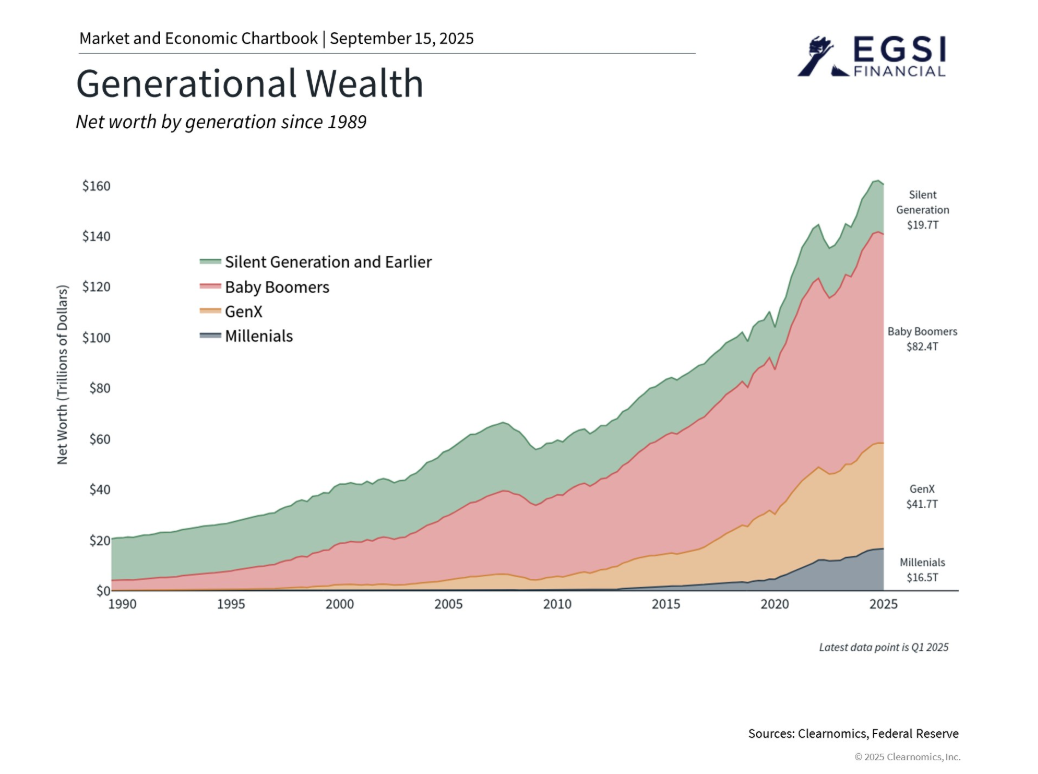
The amount and type of wealth being passed down has changed a lot over recent decades. Unlike older generations who mostly relied on company pensions and Social Security, today’s retirees have built up large amounts of money in retirement accounts and investment portfolios. Baby Boomers – people who are between 61 and 79 years old in 2025 – now control more than $82 trillion in wealth, according to the Federal Reserve.
This growth in wealth comes from several big changes: people are living longer, financial markets have performed well for an extended time, and there’s been a major shift from traditional company pensions to retirement plans like 401(k)s and individual retirement accounts (IRAs). While this change meant people had to take more responsibility for saving for retirement, it also created larger pools of money that will eventually go to heirs. The result is that more families than ever before need to think carefully about how to transfer wealth.
Smart planning helps create a lasting legacy

What makes this especially important is that these assets often represent many years of careful saving and investing. Today’s wealth transfers often include diverse investment portfolios (collections of different stocks, bonds, and other investments), multiple retirement accounts, and various tax-advantaged savings accounts. Along with inherited real estate or family businesses that previous generations might have passed down, each of these requires careful planning to ensure smooth transitions and the best tax treatment.
This means that estate planning (preparing for how your assets will be distributed after death) is more important than ever. While many people think of estate planning as just writing a will and related documents like a power of attorney (which lets someone make decisions for you if you can’t) and healthcare directives, thoughtful wealth transfer involves more than just deciding who gets what. By thinking about how your wealth can make a meaningful difference, reducing taxes, and managing complex assets, investors can create a lasting legacy.
It’s important to note that while everyone’s financial situation and legacy goals are different, the basic principles are similar. Just like Maslow’s hierarchy of needs (a theory that explains how people must meet basic needs like food and shelter before focusing on higher goals), wealth planning follows a similar pattern. Once you’ve saved enough for retirement to cover your basic needs, you can focus on creating meaningful impact with your wealth.
Remember that many family disputes over inherited wealth don’t happen because there isn’t enough money, but because of complicated structures, unclear intentions, or heirs who aren’t prepared. A complete wealth transfer strategy should include values, expectations, and financial responsibility to ensure smoother transitions.
Ways to make wealth transfers work better
Looking at practical strategies, some of the most important decisions in making a wealth transfer work well involve timing and taxes. Here are several effective strategies to consider:
1. Tax-Smart Giving During Your Lifetime. Giving money away while you’re still alive isn’t right for everyone, since it requires being confident that you won’t need those assets for your own retirement, especially given rising healthcare costs and longer life expectancies.
That said, annual gift tax exclusions (limits set by the government) allow a person to give up to $19,000 per recipient in 2025 without reducing your lifetime estate tax exemption (the total amount you can give away tax-free during your life and at death). Giving during your lifetime can also provide practical benefits beyond tax savings. You can see how recipients handle the money, offer guidance on managing finances, and enjoy seeing the positive impact of your generosity.
For those interested in charitable giving, there can be significant tax advantages to contributing to a donor-advised fund (an account that lets you make charitable contributions and recommend grants to charities over time). Including family members in charitable decisions can help pass down values along with wealth.
2. Funding Education Across Generations. By investing in education, you can give young family members the tools and knowledge they need to build successful futures. This can be especially meaningful since college costs have grown much faster than general inflation over recent decades, so helping with these expenses can make a huge difference.
Unlike other gifts, payments made directly to schools for tuition don’t count against annual gift tax exclusions, making this an especially tax-efficient wealth transfer strategy. Additionally, contributions to 529 education savings plans (special accounts designed for education expenses) offer unique benefits for legacy planning. You can contribute large amounts while keeping control over the account. 529 plans can be used for K-12 tuition, college, and even student loan payments.
For larger families with multiple grandchildren or great-grandchildren, education trusts (legal arrangements that hold money specifically for education expenses) might also be worth considering. While education trusts can add complexity, they can help ensure fair treatment across beneficiaries, supporting multiple generations over time and creating an enduring legacy.
3. Smart Account Management Strategies. Asset location involves strategically placing investments within different types of accounts – taxable accounts (where you pay taxes on gains each year), tax-deferred accounts (like traditional IRAs where you pay taxes when you withdraw), and tax-free accounts (like Roth IRAs where you don’t pay taxes on withdrawals) – to get the best results.
By thoughtfully considering your financial structures and matching certain assets to specific bequests, you can ensure you and your beneficiaries get the most out of your money. You can even use techniques like tax-loss harvesting (selling investments at a loss to offset gains and reduce taxes) to minimize tax implications.
For example, if you have large unrealized capital gains (profits you haven’t taken yet) in a taxable account, you have options to minimize the tax burden. This might include waiting until after death for the cost basis to “step up” (a tax rule that resets the purchase price for heirs), or potentially deciding to gift that asset to charity over time. If done thoughtfully, charitable giving could provide the double benefit of upfront tax deductions along with not having to pay tax on that gain.
4. Advanced Estate Planning Techniques. As wealth transfer amounts increase and tax implications become more complex, advanced estate planning techniques can become beneficial.
This might involve trusts (legal arrangements where assets are held by one party for the benefit of another) that distribute assets over time, including specific provisions or charitable components that involve the next generation. The complexity of modern wealth transfer also extends to business interests, retirement account beneficiary designations (who gets the money when you die), and coordination between different types of liquid assets (easily sold like stocks) and illiquid assets (harder to sell like real estate).
All of these strategies require specific expertise to ensure the best outcomes and avoid unintended consequences. Yet, the opportunity to help future generations succeed has never been greater.
The bottom line? The Great Wealth Transfer represents a historic opportunity to create lasting impact across generations. Whether you’re preparing to transfer wealth or expecting to receive it, thoughtful planning can help ensure your family’s financial legacy serves its intended purposes.
We are an independent financial services firm helping individuals create retirement strategies using a variety of investment and insurance products to custom suit their needs and objectives.
Advisory services offered through EGSI Investment Management, Inc., a Registered Investment Advisor with the State of Ohio. Insurance services offered through EGSI Financial, Inc.
Investing involves risk, including the potential loss of principal. No investment strategy can guarantee a profit or protect against loss in periods of declining values. None of the information contained on this website shall constitute an offer to sell or solicit any offer to buy a security or any insurance product.
Any references to protection benefits, safety, security, or steady and lifetime income streams on this website refer only to fixed insurance products. They do not refer, in any way, to securities or investment advisory products. Annuity guarantees are backed by the financial strength and claimspaying ability of the issuing insurance company. Annuities are insurance products that may be subject to fees, surrender charges and holding periods which vary by insurance company. Annuities are not FDIC insured.
The information and opinions contained in any of the material requested from this website are provided by third parties and have been obtained from sources believed to be reliable, but accuracy and completeness cannot be guaranteed. They are given for informational purposes only and are not a solicitation to buy or sell any of the products mentioned. The information is not intended to be used as the sole basis for financial decisions, nor should it be construed as advice designed to meet the particular needs of an individual’s situation.
Investing involves risk, including the potential loss of principal. No investment strategy can guarantee a profit or protect against loss in periods of declining values. None of the information contained on this website shall constitute an offer to sell or solicit any offer to buy a security or any insurance product.
Any references to protection benefits or steady and reliable income streams on this website refer only to fixed insurance products. They do not refer, in any way, to securities or investment advisory products. Annuity guarantees are backed by the financial strength and claims-paying ability of the issuing insurance company. Annuities are insurance products that may be subject to fees, surrender charges and holding periods which vary by insurance company. Annuities are not FDIC insured.
The information and opinions contained in any of the material requested from this website are provided by third parties and have been obtained from sources believed to be reliable, but accuracy and completeness cannot be guaranteed. They are given for informational purposes only and are not a solicitation to buy or sell any of the products mentioned.